
In my last post, I shared the four outcomes we are focused on delivering for our customers with Nuvo AI:
Reducing freight spend
Improving service levels
Simplifying your logistics tech stack
Staying ahead on AI
In this post, I’ll dive deep into the first one: reducing freight spend.
For almost every shipper, manufacturer, distributor, or retailer we work with, freight is one of the largest cost buckets on their P&L. It is also one of the hardest to control because the market moves constantly, capacity changes quickly, and the actual work of managing rates, routing guides, carrier performance, invoices, and exceptions is extremely manual.
That problem is getting more urgent right now. The North American freight market is entering an inflationary cycle. According to the latest U.S. Bank Freight Payment Index, national spot linehaul rates climbed roughly 28% in less than a year, capacity is tightening, and diesel prices recently saw the largest single-week spike on record.
In a market like this, being passive about freight spend is one of the fastest ways to watch costs spiral out of control.
Why freight spend increases unexpectedly
Most shippers already know what they should be doing to control freight spend.
They should be benchmarking every load against the current market. They should be using their routing guides before going to the spot market. They should be holding carriers accountable to contracted rates and service levels. They should be auditing invoices before payment goes out. And they should be using every load to make the next pricing, routing, and procurement decision smarter.
The challenge is that doing this consistently across every load is extremely hard with the way most freight tech stacks work today.
Most of the shippers we talk to are still running most of this on spreadsheets or a basic / simple TMS. In even the most innovative organizations, the workflow still looks something like this:
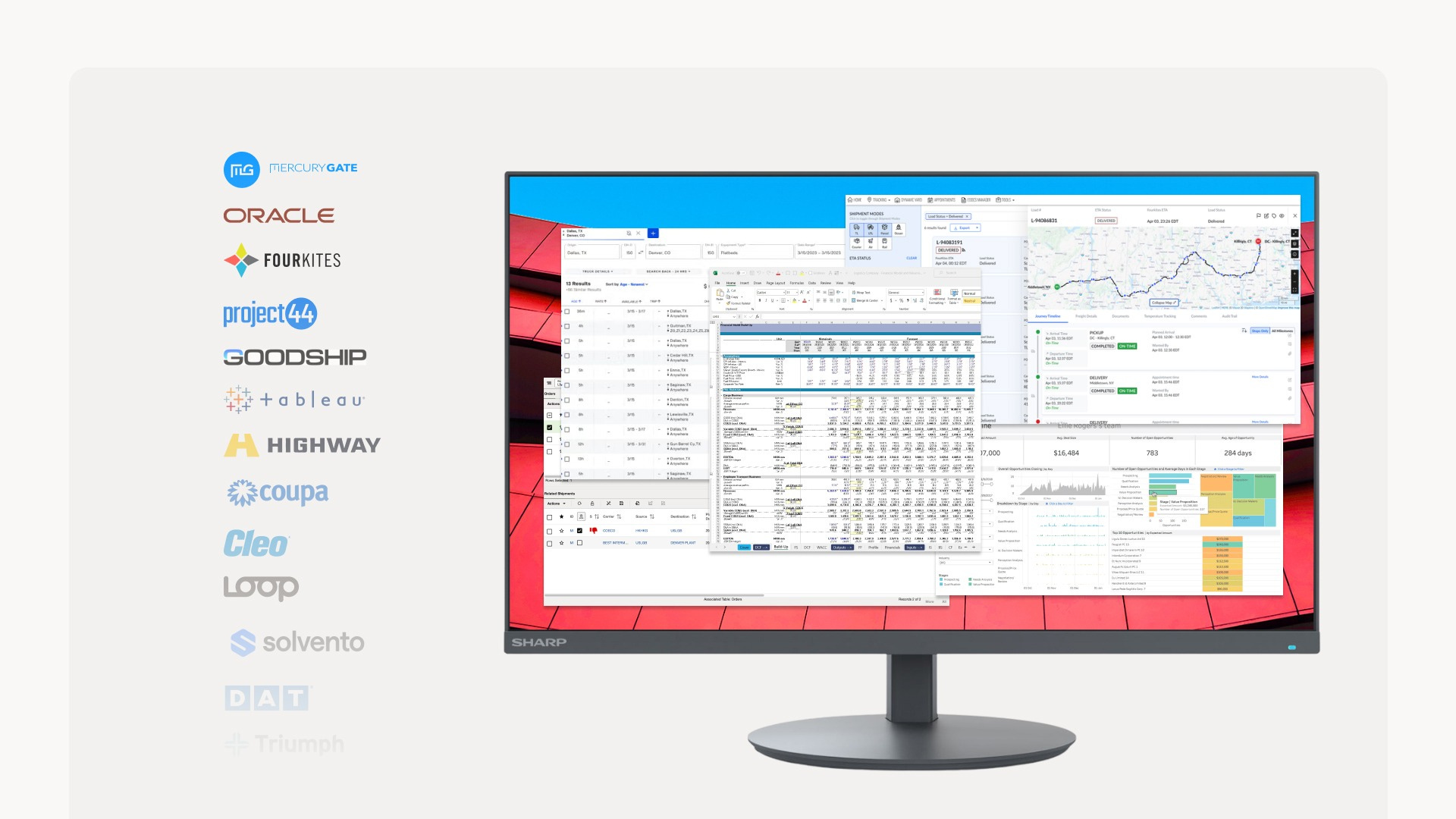
A TMS owns the shipment record.
A rate intelligence tool benchmarks the lane in another tab.
A routing guide or carrier portal sits somewhere else, maybe in a bidding / RFP tool or a generic procurement tool.
A freight audit and pay provider reviews invoices & accessorials weeks after delivery.
A BI dashboard tries to reconcile everything after the fact.
A middleware / integrations provider helps attempt at stitching these things together
That means there are multiple tools, multiple databases, and multiple versions of the truth.
The result is that freight teams end up doing a lot of manual work just to answer basic questions:
Are we buying rates above or below market?
Did our carriers honor their volume & pricing commitments?
Did our carriers honor their service level promises?
What do our service metrics & profitability metrics look like by consignee or by facility?
Did the invoice match the rate confirmation?
Why are we paying accessorials?
Where and when should we re-bid or renegotiate?
These are all questions that AI can help you answer; but AI can only help here if it has the right system and data underneath it.
Nuvo AI controls cost before, during, and after every load
The reason most teams don’t have that system today isn’t lack of effort. The work is split across five or six tools that don’t talk to each other - TMS, rate intel, routing guide, audit and pay, BI. Every load creates more data in more systems with more reconciliation. The bigger you get, the worse it gets.
We built Nuvo AI the opposite way. Every load runs through one shipment record, one database, with a fleet of AI agents working on the same data layer. The same system that prices the load also sources the carrier, enforces the routing guide, validates compliance, and audits the invoice when it comes back.
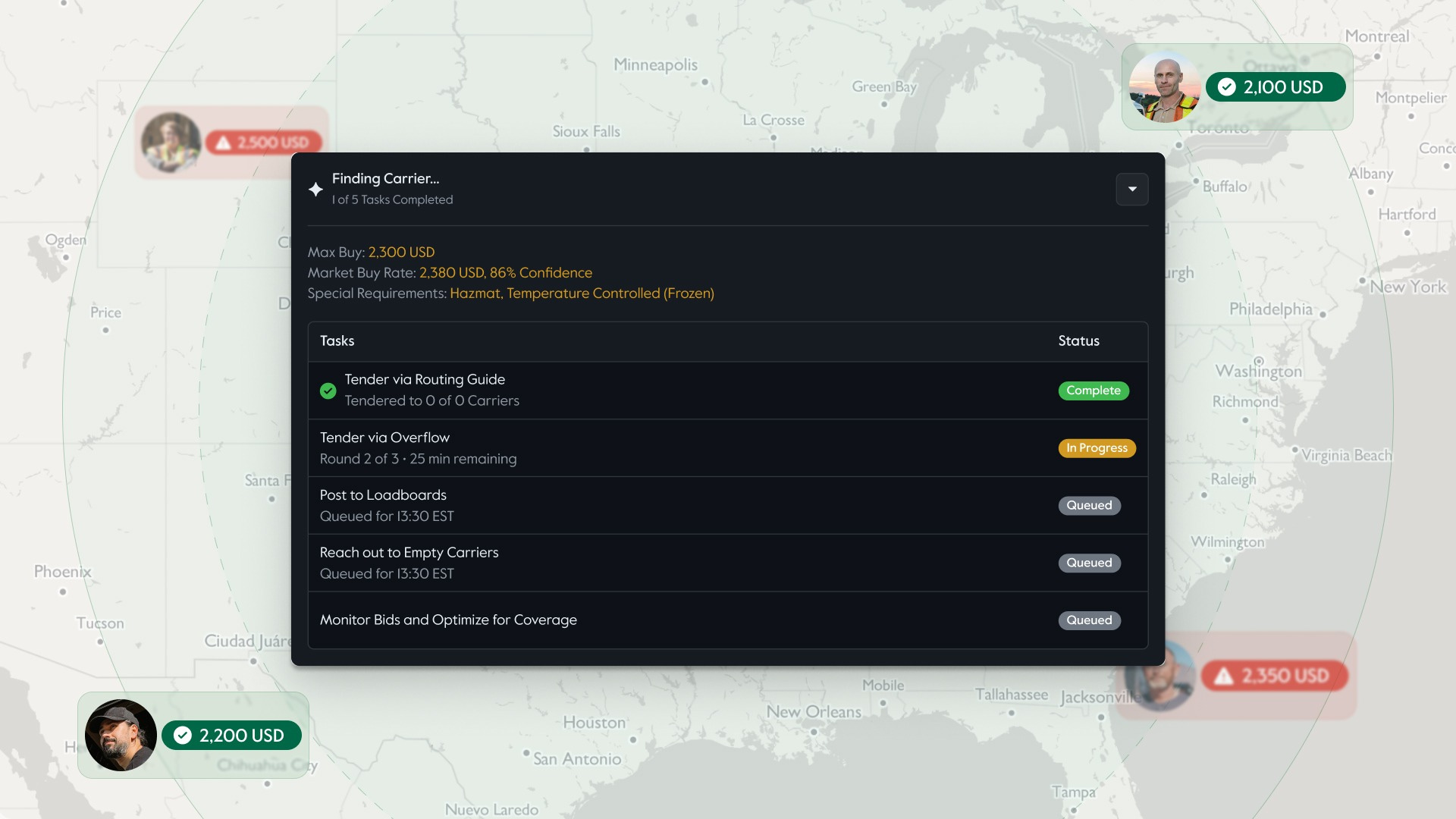
The agents aren’t running rules. They’re given a goal - cover this load at the lowest cost that meets service and compliance - and they work the data to get there. On a given load, that means checking the routing guide first and auto-tendering to the contracted carrier when their performance and pricing hold up.
When they don’t, the same system pivots to our in-network vetted carriers that a shipper doesn’t yet work with. If you still can’t find the right carrier, then we go to the open market, negotiate against a live max buy, run the awarded carrier through compliance, and book the best option. The invoice gets matched against the rate confirmation when it arrives. No handoff between tools. (Hear one of our AI agents negotiating $100 off a load successfully below).
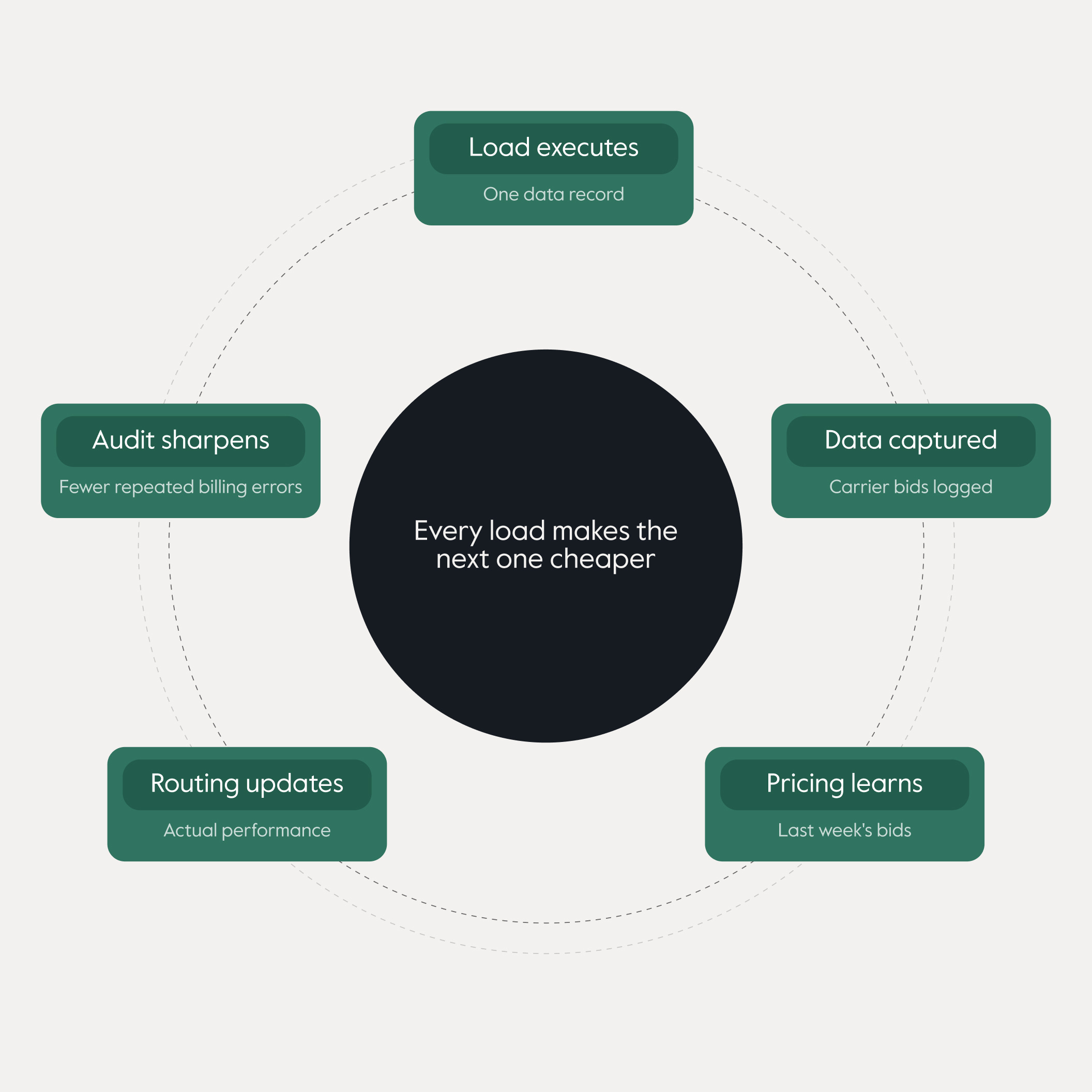
The reason this gets cheaper over time is that every load produces data the next load actually uses. The pricing engine sees what carriers bid on your lane last week, not what a benchmark tool said last quarter. The routing guide updates based on which carriers actually showed up on time, not who got picked in the last bid cycle. The audit catches the same accessorial mistake on the third invoice, not the thirtieth.
If you want to see these running on your freight, book a demo HERE. We can show you the power of Nuvo AI running on your freight with as little as ten US truckload shipments.
One live freight cost number for the CFO and logistics team
For shippers, all of this shows up in the Nuvo AI Control Tower.
Inside the Control Tower, shippers can see:
Live freight spend: month-to-date spend vs. budget, broken down by lane, mode, and carrier.
Market positioning: how each lane compares against live market benchmarks.
Routing guide compliance: which loads moved on contract vs. spot, and where leakage is happening.
Carrier performance: which carriers are accepting, delivering on time, and invoicing correctly.
Savings tracking: cumulative savings from pricing, routing guide enforcement, sourcing, negotiation, and audit.
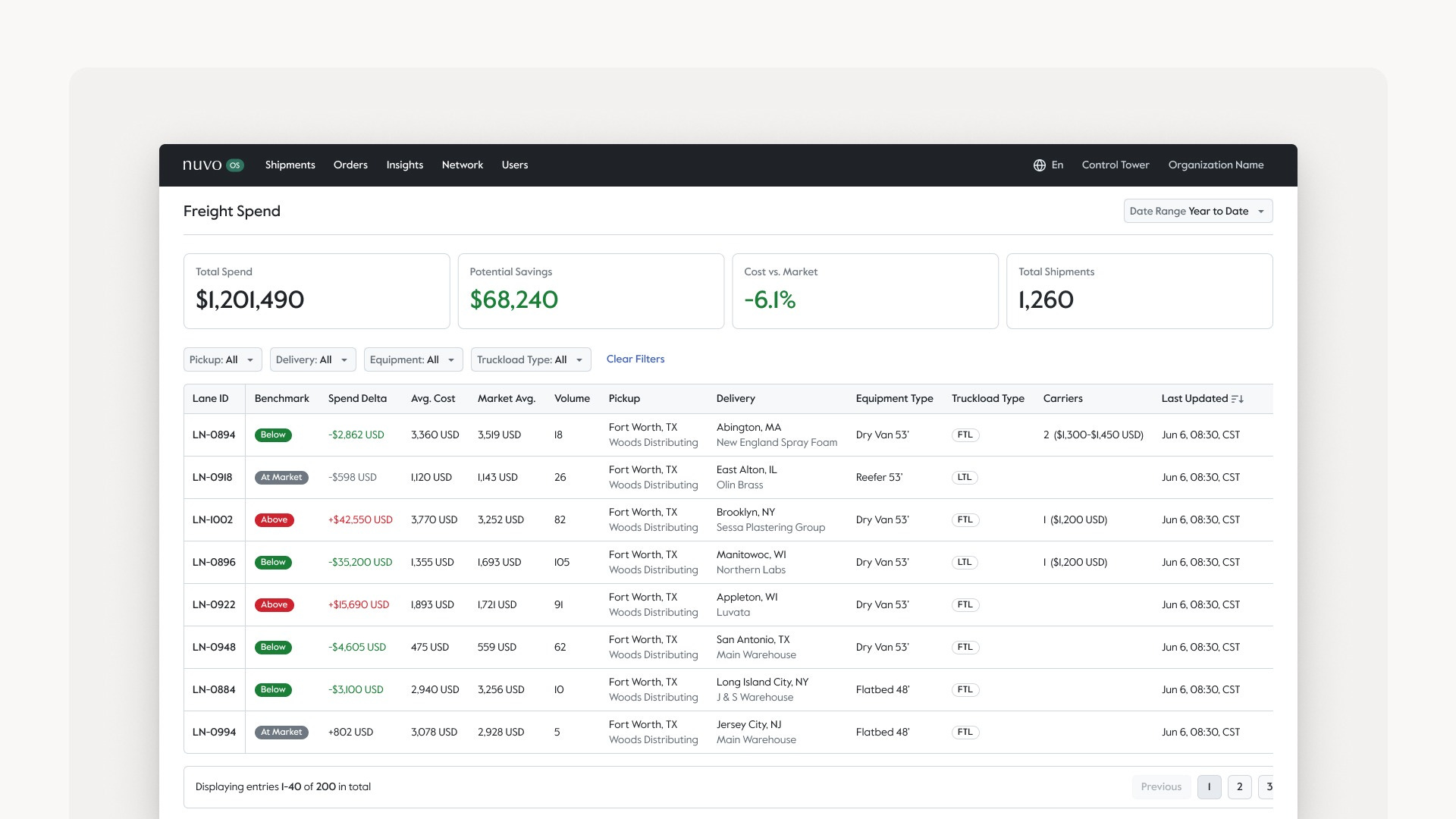
This is the part I’m most excited about because it changes the conversation. Instead of waiting for a quarterly business review to understand what happened, shippers can see where cost is being created or avoided in real time. The CFO, logistics manager, operator, and carrier sales team can all work from the same number.
That sounds obvious, but in freight it is still not the norm. Most folks are forced to react to data looking backwards on a historical basis after a lot of manual effort to put the data in a digestible format in the first place.
Results: We’ve reduced multiple shippers freight costs by 7-25%
Today, Nuvo AI is running in production across thousands of loads per month.
Across many customers embracing Nuvo AI, we are seeing clear results such as:
7–25% freight cost reduction in year one across comparable accounts.
8% greater purchasing power vs. live market rates, which are extremely tangible and concrete dollars saved.
We work with our customers to hold ourselves accountable to these kinds of results because we know these are the KPIs they care about that create real value.
What becomes possible when every load makes the next one cheaper
Reducing freight spend is only the first of the four outcomes we are building toward with Nuvo AI. The same operating system that helps reduce cost also helps improve service levels, simplify the logistics tech stack, and keep shippers ahead as AI keeps changing.
If you are a shipper and want to see Nuvo AI running on real freight, you can start with as few as 10 live truckload shipments. Within 14 days, we can show real performance data on your lanes, your carriers, and your freight spend.
If you want to see the agent fleet and the Control Tower in action, please book a demo of Nuvo AI, our AI-native operating system for North American freight.
In the next post, I’ll go deep on the second outcome: improving service levels.
Thanks for reading!